
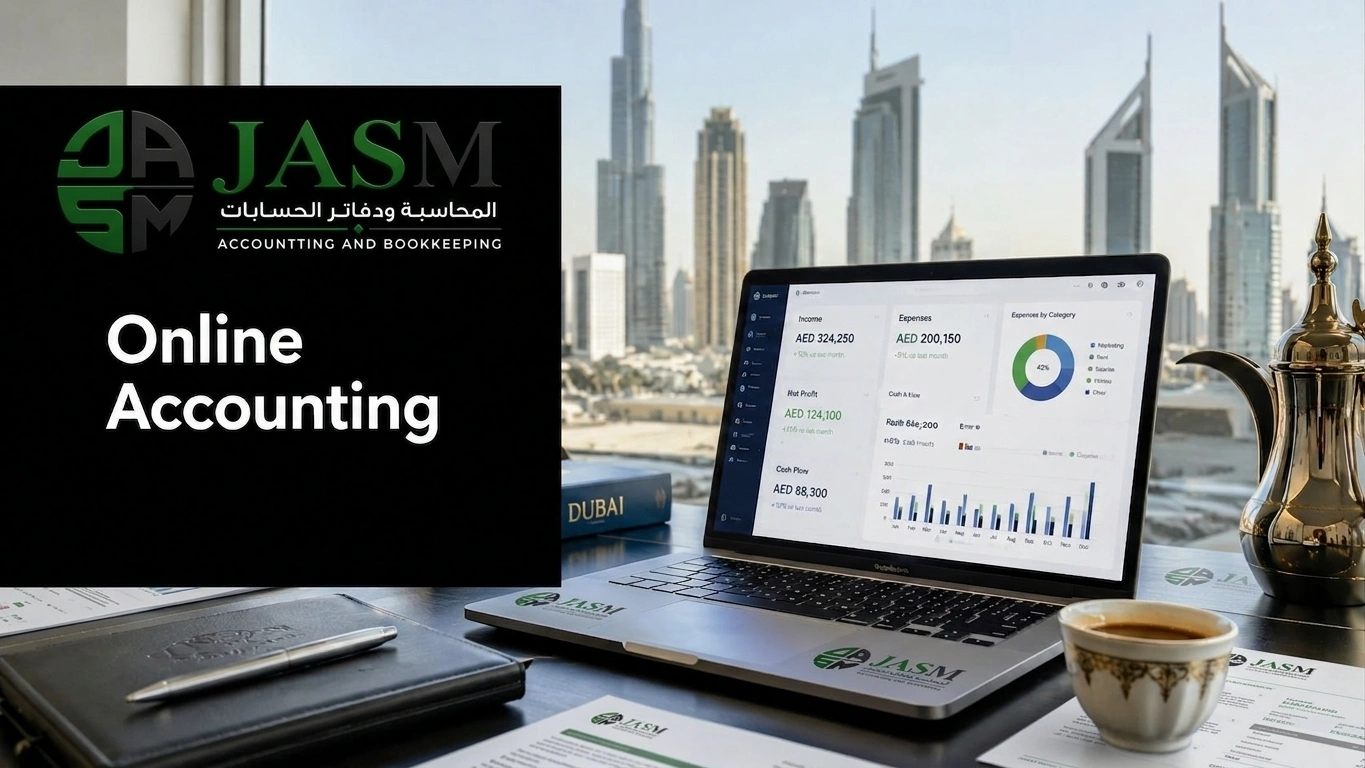
Quick answer: For most UAE SMEs, yes, cloud accounting is worth it, primarily because it connects directly to UAE bank feeds, gives real-time visibility instead of month-old numbers, and integrates far more easily with e-invoicing requirements arriving in 2027. But it’s worth being clear about what it doesn’t do: most cloud platforms generate VAT reports for filing, they don’t file automatically, and none of them replace the judgment needed to reconcile accounts properly or apply tax treatment correctly. The software changes how fast you see your numbers. It doesn’t change whether those numbers are right.
Almost everything written about this topic is a software comparison, which tool wins, Zoho versus QuickBooks versus Wafeq. That’s useful once you’ve already decided to switch. It’s less useful if the actual question sitting in front of you is simpler: should you switch at all, and is the answer different depending on the size and stage of your business?
Here’s the honest version of that answer.
What Actually Changes When You Move to the Cloud
Traditional bookkeeping, in the sense most UAE SMEs still run it, means desktop software installed on one office computer, spreadsheets passed around by email, and a bookkeeper who processes things periodically rather than continuously. Cloud accounting replaces that with a system accessed through the internet, where transactions, bank feeds, invoices, and reports update in something close to real time, and anyone with access can see the same live numbers from anywhere.
Post-pandemic adoption of this shift has been significant, remote and cloud-based bookkeeping adoption reportedly reached over 62% in Dubai and over 51% in Abu Dhabi, according to industry review data. That’s not a niche trend anymore, it’s closer to becoming the default expectation for how a modern UAE SME manages its books.
The Real Cost Comparison
This is where most software review pages get genuinely useful, and it’s worth restating clearly: traditional desktop software looks cheaper on the surface, one license fee, paid once, done. But that comparison rarely accounts for what comes after, server maintenance, IT support when something breaks, and upgrade fees as versions age out of support. Once those costs are added up, cloud subscriptions tend to come out ahead on total cost of ownership over a two to three year horizon, even though the sticker price looks higher month to month.
The other cost that rarely makes it into a comparison table: the hours a team loses to manual data entry, reconciling spreadsheets by hand, and chasing down numbers that live in three different places. That’s a real cost, it’s just one that doesn’t show up on an invoice.
What Cloud Software Actually Handles Well
Real-time bank reconciliation. Most cloud platforms connect directly to major UAE banks, Emirates NBD, ADCB, RAKBANK, FAB, and Mashreq among them, pulling transactions in automatically rather than requiring manual statement imports.
Multi-currency and multi-user access. For businesses dealing with international clients or suppliers, or teams split across offices, this genuinely solves a problem traditional desktop software handles poorly.
VAT-aware invoicing. UAE-focused platforms like Wafeq, and general platforms like Zoho Books and QuickBooks Online configured properly, generate VAT-compliant invoices and reports automatically as transactions are entered.
What Cloud Software Doesn’t Actually Do
Here’s the detail that gets glossed over constantly, and it matters: most cloud accounting platforms generate VAT reports for you to file, they don’t file your VAT return with the FTA automatically. Only a small, newer category of AI-driven platforms currently offers genuinely automated FTA portal filing. If you’ve assumed that adopting cloud software means your compliance is now “handled,” it’s worth confirming exactly what your specific platform does and doesn’t submit on your behalf.
More importantly, no software, however well configured, replaces the judgment involved in properly reconciling your accounts. We’ve covered this in detail in our guide to account reconciliation, a bank feed showing a transaction landed in your account tells you nothing about whether it’s been categorized correctly, whether it matches the right invoice, or whether a discrepancy elsewhere in your books needs investigating. Software gives you the data faster. It doesn’t interpret that data for you.
Choosing Between the Main UAE-Relevant Platforms
Without turning this into another product ranking, a few honest notes on where each option genuinely fits:
QuickBooks Online carries the advantage of familiarity, many accountants and advisors already know it well, which speeds up month-end close and handoffs. The tradeoff is that it’s a global product requiring careful configuration to properly handle UAE-specific VAT treatment and document flow.
Zoho Books works particularly well for businesses already using other Zoho products, and offers solid Arabic UI support and multi-currency handling at accessible pricing.
Wafeq stands out for being built specifically around UAE and GCC compliance requirements from the ground up, rather than adapted afterward, with strong Arabic-first design and UAE payroll (WPS) alignment.
The right choice depends less on which platform is “best” in the abstract and more on what your accountant already works in, what your team can actually learn quickly, and how your business specifically operates.
Why This Decision Matters More With E-Invoicing Approaching
Here’s a genuinely practical reason to think about this now rather than later: cloud-based accounting systems generally integrate far more smoothly with e-invoicing Accredited Service Providers than legacy desktop software does. We’ve covered the ASP selection process in detail in our guide to the UAE e-invoicing deadline, and one detail worth knowing here specifically: businesses still running on desktop software when e-invoicing becomes mandatory for them face a much heavier integration project than those already on a connected cloud platform. If a switch is coming eventually, doing it ahead of your e-invoicing deadline, rather than at the same time, spreads out what would otherwise be two major transitions happening at once.
This broader shift also sits within the UAE’s wider push toward digital transformation across the economy, part of the national Digital Economy Strategy, which explicitly aims to expand the digital economy’s share of non-oil GDP over the coming years. UAE businesses moving toward cloud-based financial systems are, in a small way, part of that broader national direction, not swimming against it.
Who Should Actually Switch, and Who Can Wait
If you’re a very early-stage business with minimal transaction volume, the urgency here is genuinely lower, a simple, well-maintained spreadsheet system with proper oversight can hold up fine for a short period. Once you’re VAT-registered, managing multiple bank accounts, working with a remote or growing team, or approaching the point where e-invoicing will eventually apply to you, the case for switching becomes considerably stronger, both for the operational efficiency and for the compliance runway it buys you.
Making the Right Call for Your Business
Whether cloud software is worth it isn’t really a software question, it’s a question about how your business operates and where it’s heading. If you’d like help figuring out the right setup for your specific situation, and making sure whatever platform you choose is actually configured correctly for UAE VAT and corporate tax requirements, get in touch with our team. Our online accounting and bookkeeping services cover exactly this, getting the technology right, and making sure a qualified eye is still on the numbers behind it.

Frequently Asked Questions
Is cloud accounting actually cheaper than traditional bookkeeping software?
Over a two to three year period, generally yes, once you account for server costs, IT support, and upgrade fees that traditional desktop software incurs but a cloud subscription doesn’t.
Does cloud accounting software file my VAT return automatically?
Usually not. Most platforms generate VAT reports and calculations for filing, but the actual submission to the FTA is often still a manual step, only a small number of newer platforms currently automate the filing itself.
Which cloud accounting software is best for UAE SMEs?
It depends on your specific needs. QuickBooks Online offers strong advisor familiarity, Zoho Books suits businesses already in the Zoho ecosystem with good Arabic support, and Wafeq is built specifically around UAE and GCC compliance requirements from the ground up.
Does switching to cloud accounting replace the need for a bookkeeper or accountant?
No. Cloud software speeds up data entry and visibility, but it doesn’t replace the judgment needed to reconcile accounts correctly, apply proper VAT treatment, or catch discrepancies that automated feeds alone won’t flag.
Should a small UAE startup switch to cloud accounting immediately?
Not necessarily. Very early-stage businesses with minimal transaction volume can often manage with simpler systems initially. The case for switching strengthens significantly once you’re VAT-registered, managing multiple accounts, or approaching e-invoicing requirements.
How does cloud accounting relate to the UAE’s e-invoicing requirements?
Cloud-based systems generally integrate more easily with e-invoicing Accredited Service Providers than legacy desktop software, making the eventual transition to mandatory e-invoicing considerably smoother for businesses already on a connected platform.
